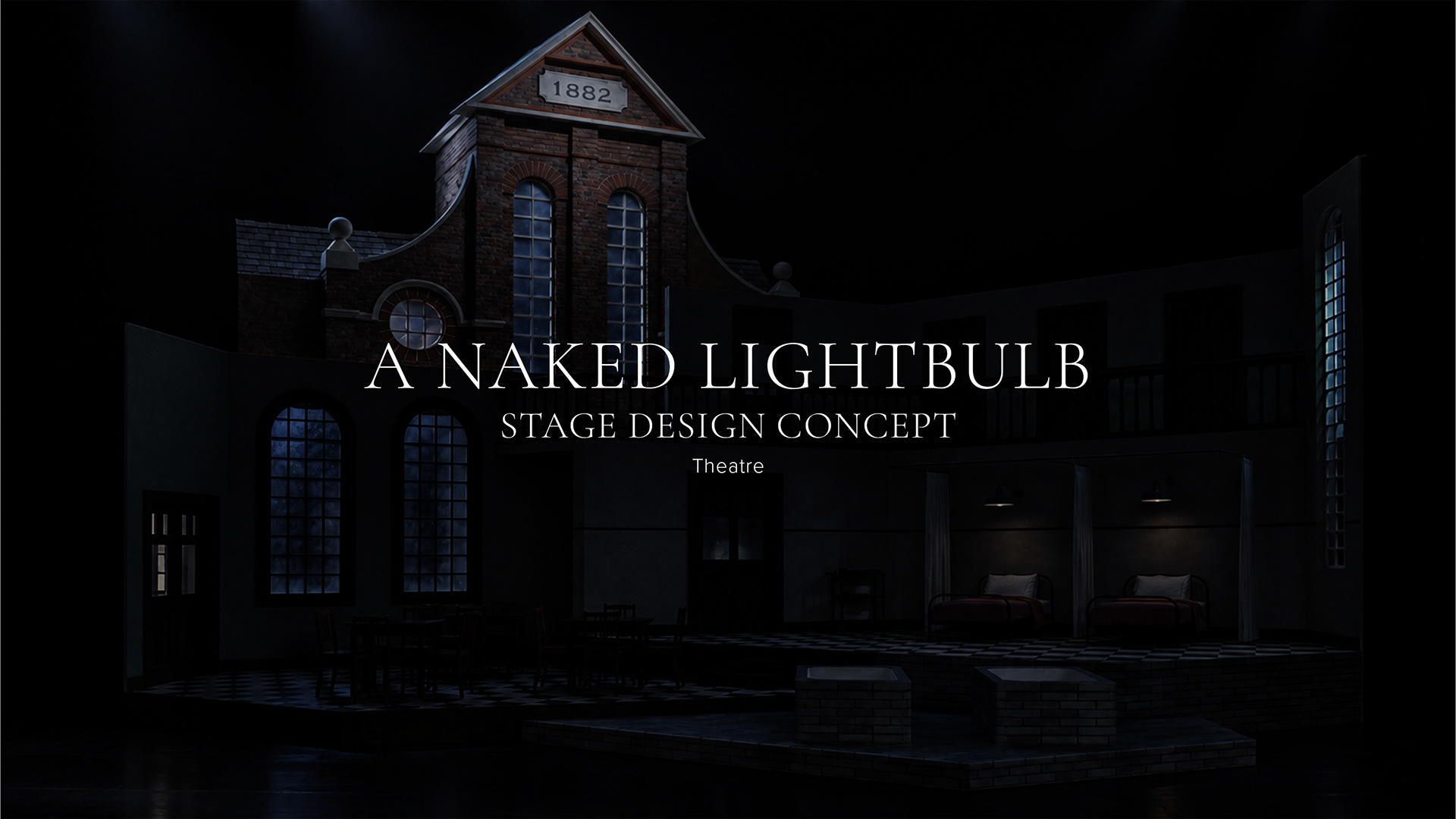
In this haunting sequel to A Streetcar Named Desire, Blanche DuBois resides within the shadowed halls of a decaying Victorian asylum in the 1950s, her mind a fragile theatre where ghosts of her past blur with the present. Stanley Kowalski reappears as Dr. Kowalski, the domineering head psychiatrist probing her fractured psyche, while the ward nurse bears the gentle face of Stella; her sister and betrayer merged into one figure of care and control. As Blanche drifts between illusion and lucidity the play unravels the nature of trauma and denial, questioning the boundaries between fiction and reality and exposing the cruel expectations placed upon women in a world that grants them little agency.
CONCEPT DEVELOPMENT + SET DESIGN | Cleo Harris-Seaton
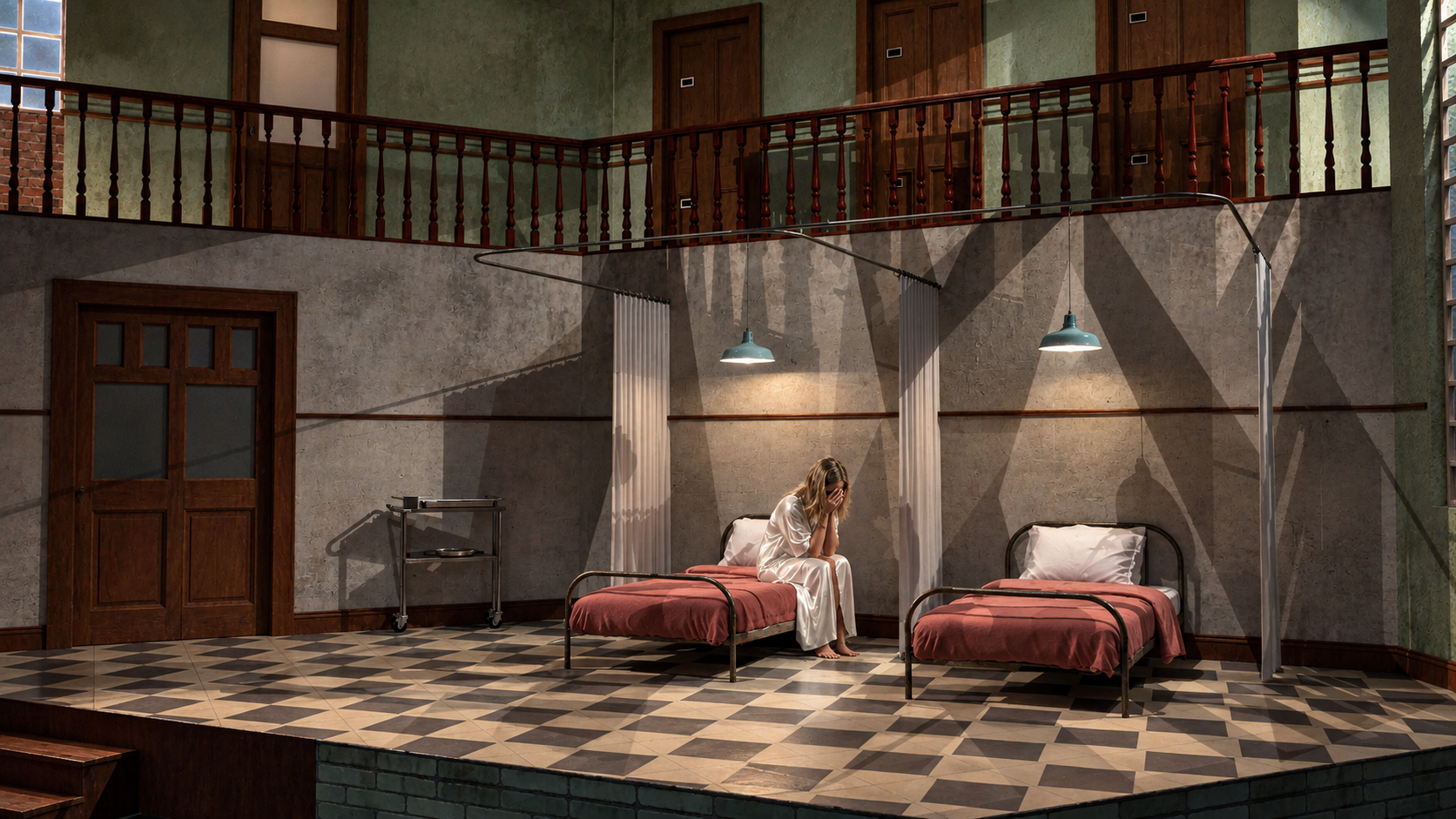
The set design reimagines A Streetcar Named Desire’s world within the confines of a 1950s asylum, transforming Blanche DuBois’s fractured psyche into a foreboding physical space. The overall structure evokes the decaying grandeur of a Victorian institution; high arched windows, tiled floors and faded green walls, blending institutional rigidity with ghostly elegance. The central brick façade marked 1882 anchors the setting in history, its towering windows casting long shafts of light that suggest both confinement and revelation.
The lower level serves as the communal ward; checkered flooring, wooden tables and simple metal-framed beds curtained for privacy, reinforcing the sense of control and exposure. The tiled bath area at the front edge of the stage hints at cleansing rituals and echoes Blanche’s obsession with purity and escape whilst the upper gallery, lined with closed wooden doors, creates a looming sense of surveillance, a reminder of unseen authority and memory.
Lighting and shadows play a crucial narrative role; stark bulbs and shifting silhouettes distort perception, visualising Blanche’s blurred boundaries between past and present. The reappearance of Stanley as Dr. Kowalski and Stella as a nurse finds expression in the architectural layering with domestic and institutional spaces fused into one oppressive dreamscape. Altogether, the design powerfully externalises Blanche’s mental collapse where time, memory and identity dissolve within the asylum’s melancholic walls.
